
What is not on the survey
A survey covers damp, movement, wiring, drains and the roof. A solicitor's searches cover planning, boundaries, covenants and whether the council intends to put a road through the garden. Between them they are thorough about the building as an object.
Neither of them covers what has happened in it, and there is no third document that does. The practice's position is that what happened in a house is the thing most likely to affect the people who live in it next — which puts it in the peculiar position of being the most important fact about a building and the only one nobody in the transaction is required, or able, to supply.
This is an account of what a place accumulates, and it is a belief-based one, offered as that. It is set out here because anybody considering having a house cleared wants to know what is supposed to be in it, and being vague about that is no kindness.
A house does not start again when the owners change
A house fills up slowly, and nobody keeps the record.
A family lives in it for thirty years and everything that happens to them happens in those rooms — the good decades and the bad year, the illness, the disagreement that ended something, the long quiet after somebody died. Then they leave, and the next family arrives with a van and a kettle and no information whatsoever about any of it. The survey does not cover it. The estate agent would not know. Nobody is hiding anything; there is simply no mechanism anywhere in the process of buying a house for that to be handed over.
Then multiply it. Most houses have had more than one family. Older ones have had many. And underneath all of them is the ground, which was there long before anything was built on it and has had a correspondingly longer time to collect whatever it collects — including, in a good deal of the world, things nobody living has any memory of.
Two identical houses on the same street have had entirely different centuries. Which is why each one is read before anything is done to it, and why no two are dealt with the same way.
Not all of it is history
Some of what is in a building has nothing to do with what happened in it, and is simply present. Water moving under the foundations, and water that has gone wrong. Lines of energy crossing the site. The electrical load of a modern street — wiring, masts, pylons, whatever sits on the other side of the fence and was never brought up at the viewing. These have no story attached; they are conditions, like damp, and they are dealt with as conditions.
And then there is the one people find hardest to say out loud, which is spirits and attachments. It is named here rather than dressed up, because a person who is frightened in their own house is not helped by a euphemism, and because that call — someone describing what happens in a particular room at a particular hour — is among the two or three commonest reasons anybody makes contact at all.
What happens once the house is empty
None of this involves moving anything. Nothing is bought, nothing is installed and nobody comes.
Emptying a house is not the object, either. An empty house is a neutral house, and neutral is only the halfway point.
The second half raises the place, and the aim is not a modest one: a building that sits where the old sacred sites sit, rather than where an ordinary house sits. That is what people are reaching for when they say a house feels different from the front door.
Then the level is held. The practice's stated position is that a place treated this way holds for years rather than months, and that short of taking the building substantially apart, ordinary life does not undo it.
The point is not a house with no past. It is a house that has stopped repeating it.
What a household stops doing
What people report first is almost always sleep. That is the part everyone expects.
But the part that is easier to miss is smaller than that: the things a family had quietly organised itself around, and stops having to. The chair that faced away from the corner. The landing light left on for no reason anybody could give. The unspoken agreement about which end of the house people sit in after dark. Nobody had ever discussed any of it. It had simply been arranged that way for years, and then one week it was not.
None of that is promised to any particular household, and no two households describe the same thing. It is what people say afterwards, which is a different order of evidence and is offered as that.
The building this was proved on
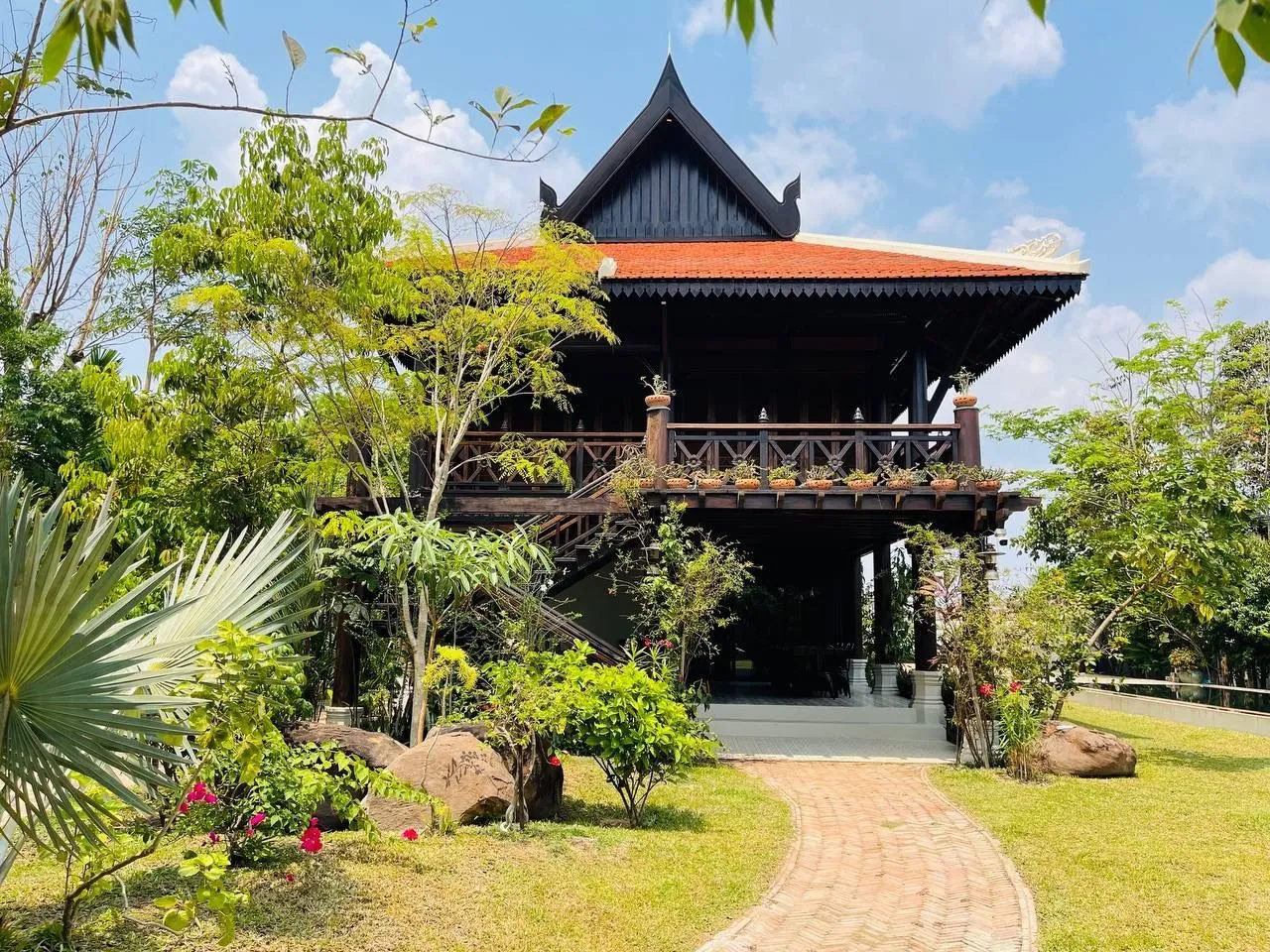
This was done to the sanctuary on the edge of Siem Reap before it was done anywhere else. That is the reason this is a practice and not a theory.
If you happen to be in Cambodia, sitting in it for an hour can usually be arranged. Nobody will ask you for anything afterwards.
What this account cannot claim
None of this is science, and the practice has never pretended otherwise. It treats no illness, and it promises nothing about health, money or luck.
The narrower thing that can be said is this. Nobody rings about a house on a whim. They ring in the eighth year of it, after the building has been looked at by every trade that could plausibly explain it, and after each of them has left saying there was nothing there to find.
That is usually the point at which somebody starts wondering whether the house is part of it. Very often it is. And a house, unlike most of what people are handed to worry about, can be dealt with.